Why Innocent People Confess?
It's definitely comforting to think that no matter what, you would never confess to a crime you did not commit. Some would call that logical, others would call it common sense, exclaiming "Of course no one would take the fall for someone else's crime!" We naturally assume that if someone confesses, there must be some truth to it. After all, why would an innocent person willingly sign away their life and freedom?
In reality, wrongful confessions are much more complex. In the Central Park 5 incident, a group of vulnerable 14- to 16-year-old boys were questioned repeatedly for hours. Despite a complete lack of physical evidence linking them to the crime scene, all five boys ultimately confessed to the brutal rape and beating of a jogger. Brendan Dassey, a 16-year-old who was interrogated without a parent or lawyer present, ultimately confessed to murder, sexual assault, and mutilation. The questioned parties in both cases broke under psychological strain (Salerno, 2026a).
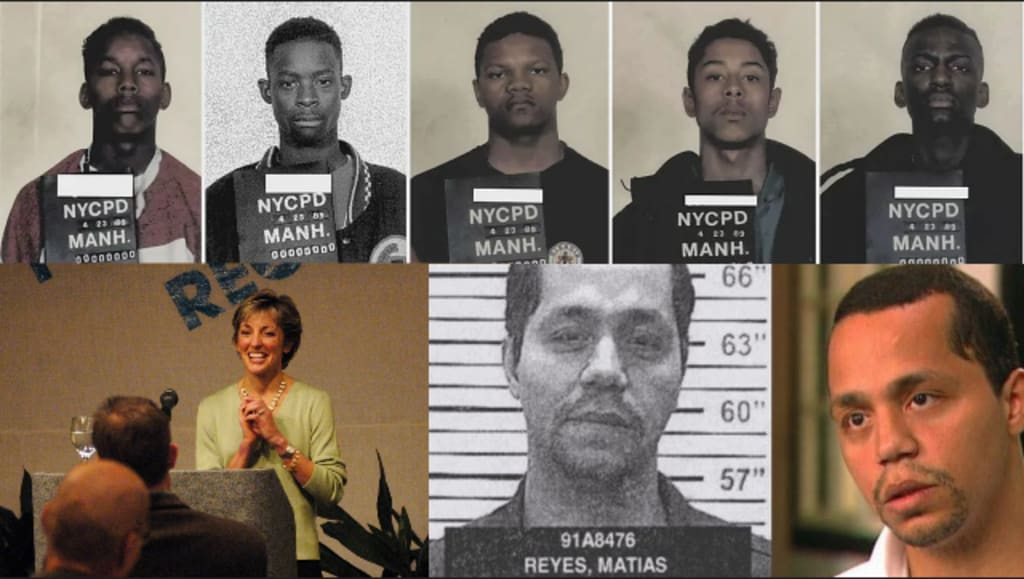
The 1989 mugshots of the wrongfully convicted "Central Park Five" (top), prosecutor Elizabeth Lederer (bottom left), the actual perpetrator Matias Reyes (bottom center and bottom right) · Source
Since these incidents, psychologists have worked to dissect the true nature of false confessions. False confessions often lead to wrongful convictions, making it an important situation to address in the realm of psychology and law. In a study by Welner et al. (2024), they found that the intense psychological pressures inherent in high-stakes criminal investigations create a profoundly coercive environment that can severely compromise a suspect's rational decision-making and self-interest. To grasp how this happens to innocent people, we first must step inside the psychology of the interrogation room.
The Presumption of Guilt
True-crime shows often portray police interrogations as objective searches for the truth. In reality, by the time a suspect is placed in that claustrophobic room, the fact-finding phase is largely over. After all, the term suspect stands for individuals that the police deem as suspicious in association with the crime. By approaching the interrogation room with this idea that the suspect is potentially guilty, there is an inherent bias which pushes the police to search and question for an admission of guilt. Innocent people often unwittingly walk right into this trap. In fact, innocent suspects waive their Miranda rights at a disproportionately high rate of 81%, largely because they hold a naive belief that they have nothing to hide and that their innocence will naturally protect them (Kassin et al., 2010).
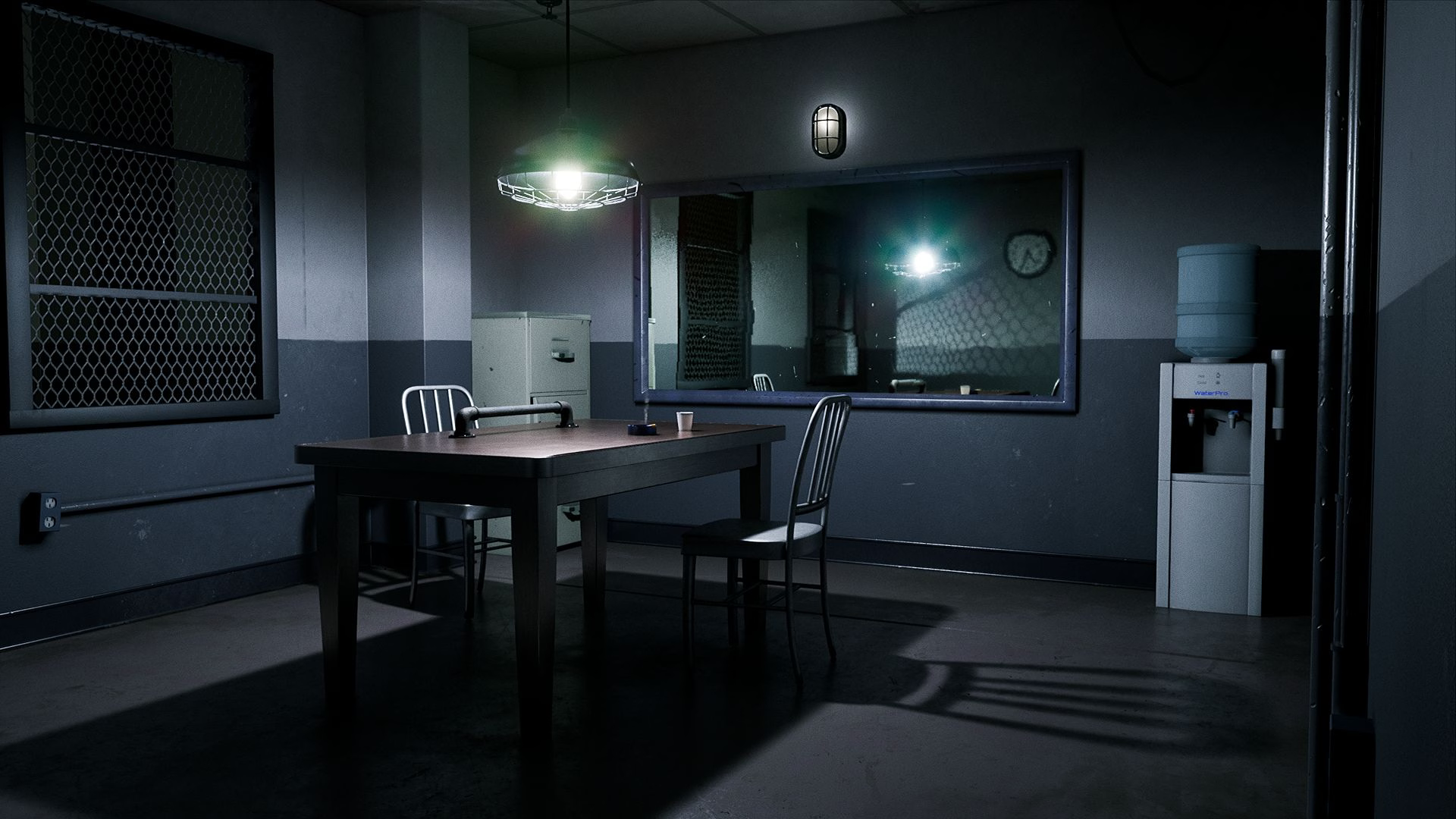
The inside of an interrogation room · Source
Many investigators are trained to observe a suspect for behavioral "guilt cues" to confirm their suspicions. They are taught that a person who avoids eye contact, crosses their arms, stutters, or offers very specific denials is actively deceiving them (Salerno, 2026b). However, the data proves otherwise. Research demonstrates that human beings, including trained police officers, can accurately distinguish truth from deception only about 54% of the time (Kassin et al., 2010). That is only slightly better than pure chance. The bodily symptoms that investigators look for may simply be normal, physiological signs of stress, which is exactly what an innocent person would experience when accused of a severe crime.
Law enforcement experience does not improve the rate of accuracy in detecting deception, but it does significantly increase the confidence that observers have in their inaccurate judgments (Kassin et al., 2010). Because the detective enters the room completely convinced they have the right person, they fall victim to confirmation bias. This "tunnel vision" may cause investigators to over-analyze their suspect and ask leading questions to confirm guilt. As leading researchers in the field explain, "Once an interrogator firmly believes a suspect is guilty… the investigator's hypothesis dictates the way the interview is conducted and how the suspect's behavior is interpreted" (Kassin et al., 2010). Under this intense, biased lens, an innocent suspect's natural anxiety can be used against them.
Research demonstrates that human beings, including trained police officers, can accurately distinguish truth from deception only about 54% of the time, barely better than chance. Law enforcement experience does not improve this rate, but significantly increases confidence in inaccurate judgments (Kassin et al., 2010).
The Mechanics of Coercion
The Reid technique is a popular model that most investigators are trained to use during interrogations. It is guilt presumptive and accusatory, and it works by convincing the suspect that there is no way out, other than confessing to their crimes. The most important factor in these interrogations is how long they last, as exhaustion from repeated questioning may lead to increased chances of false confessions. While the vast majority of routine police interrogations last from 30 minutes to 2 hours, the reality in wrongful conviction cases is far more grueling; in a study of proven false confessions, the mean interrogation time was an astounding 16.3 hours (Kassin et al., 2010). In a cohort of 125 false confessions where time was recorded, 34% lasted 6 to 12 hours, and 39% lasted between 12 and 24 hours (Kassin et al., 2010).
Acting as the "bad cop" is the common strategy through such interrogations where the investigator will repeatedly accuse the suspect and exaggerate the strength of evidence against them (Salerno, 2026a). One common technique is lying about available evidence such as the suspect's DNA at the crime scene, in attempts to attain a confession out of fear. For an innocent person, this "bad cop" approach can be daunting, especially if investigators suggest that robust evidence is available. The increasing sense of hopelessness is a contributor to false confessions.
After this, the same or a second investigator may pivot to acting as the "good cop", known as minimization (Salerno, 2026a). By offering sympathy and moral justification for the crimes, the good cop tries to offer a lifeline to the suspect, suggesting that confession is the easiest way out of the long interrogations.

A cartoon representation of the common good cop, bad cop strategy · Source

These techniques together lead to coerced-internalized confessions where an innocent person may start to doubt their memory and believe they committed the crime. As the Central Park 5 case demonstrates, juveniles are particularly susceptible to coercion, representing between 32% and 33% of proven false confession cases in major cohort analyses, despite making up a significantly smaller portion of the overall arrest population (Kassin et al., 2010).
The Taint of a False Confession
A confession is not just another piece of evidence that can be trumped or overwritten through witness testimonials and other evidence. Confessions, where suspects admit to their crimes, are much more robust and are bound to lead to guilty verdicts.
How a False Confession Corrupts the Evidence
DATA FROM DNA EXONERATION CASE FILES · KASSIN, BOGART & KERNER (2012)
Of all proven false-confession cases contained multiple concurrent errors in evidence, a cascade of contamination originating from a single coerced admission.
Knowing a suspect confessed can unconsciously skew an analyst's interpretation of ambiguous hair, bite mark, or fingerprint samples to match the confession narrative.
A witness who was previously unsure can suddenly become highly confident after police subtly reveal that the suspect already admitted to the crime.
Opportunistic inmates stepped forward to provide fabricated supporting testimony, "snitches" rewarded for corroborating the false confession narrative.
Furthermore, investigators who attain a confession will likely mould the remaining evidence to fit the new narrative established by the suspect, primarily leading to errors. In a groundbreaking analysis of DNA exoneration cases, researchers discovered that multiple errors in evidence were present in a staggering 78% of false-confession cases (Kassin, Bogart, & Kerner, 2012). The sheer scale of this corruption is alarming, as shown in the infographic below.
The Case for Mandatory Transparency
To stop wrongful convictions, we have to change how police talk to suspects. We must ban guilt-presumptive tactics like the Reid Technique. Instead, investigators should use information-gathering methods, like the PEACE model, which focus on finding facts rather than forcing confessions. The science backs this up: studies show that information-gathering techniques significantly reduce the likelihood of a false confession (Catlin et al., 2024).
But changing police culture takes time. Right now, we need total transparency. Far too often, juries only see the final, recorded confession, a neat package that hides the hours of psychological warfare that came before it. To protect the innocent, the law must require full-length video recordings of the entire interrogation, showing both the detective and the suspect. Without a full electronic recording from start to finish, it is nearly impossible for judges and juries to accurately judge if a confession was coerced (Kassin et al., 2010).
It is human nature to believe our minds are invulnerable. But as the science shows, traditional interrogation rooms are specifically designed to bypass that belief, exploiting natural human vulnerabilities. The good news is that we already have the psychological research and the tools required to fix this. By understanding the realities of coercion, demanding mandatory video transparency, and shifting to evidence-based interviewing, we can protect the innocent. The ultimate goal is to build a justice system that relies on a genuine pursuit of the truth.
- Catlin, M., Wilson, D. B., Redlich, A. D., Bettens, T., Meissner, C. A., Bhatt, S., & Brandon, S. E. (2024). Interview and interrogation methods and their effects on true and false confessions: A systematic review update and extension. Campbell Systematic Reviews, 20(4), e1441. https://doi.org/10.1002/cl2.1441
- Kassin, S. M., Bogart, D., & Kerner, J. (2012). Confessions that corrupt: Evidence from the DNA exoneration case files. Psychological Science, 23(1), 41–45. https://doi.org/10.1177/0956797611422918
- Kassin, S. M., Drizin, S. A., Grisso, T., Gudjonsson, G. H., Leo, R. A., & Redlich, A. D. (2010). Police-induced confessions: Risk factors and recommendations. Law and Human Behavior, 34(1), 3–38. https://doi.org/10.1007/s10979-009-9188-6
- Salerno, A. (2026a). Lecture 3: Psychology of police interrogations [PDF document]. eClass. York University.
- Salerno, A. (2026b). Lecture 4: Deception [PDF document]. eClass. York University.
- Welner, M., DeLisi, M., & Janusewski, T. (2024). False confessions: An integrative review of the phenomenon. Behavioral Sciences & the Law, 43(2), 185–202. https://doi.org/10.1002/bsl.2707